PhysioTech Clinic

Treatments

Clinical programmes shaped by measurement, research, and individual assessment.

Pulmonary Rehabilitation
01 Treatment

Pulmonary Rehabilitation

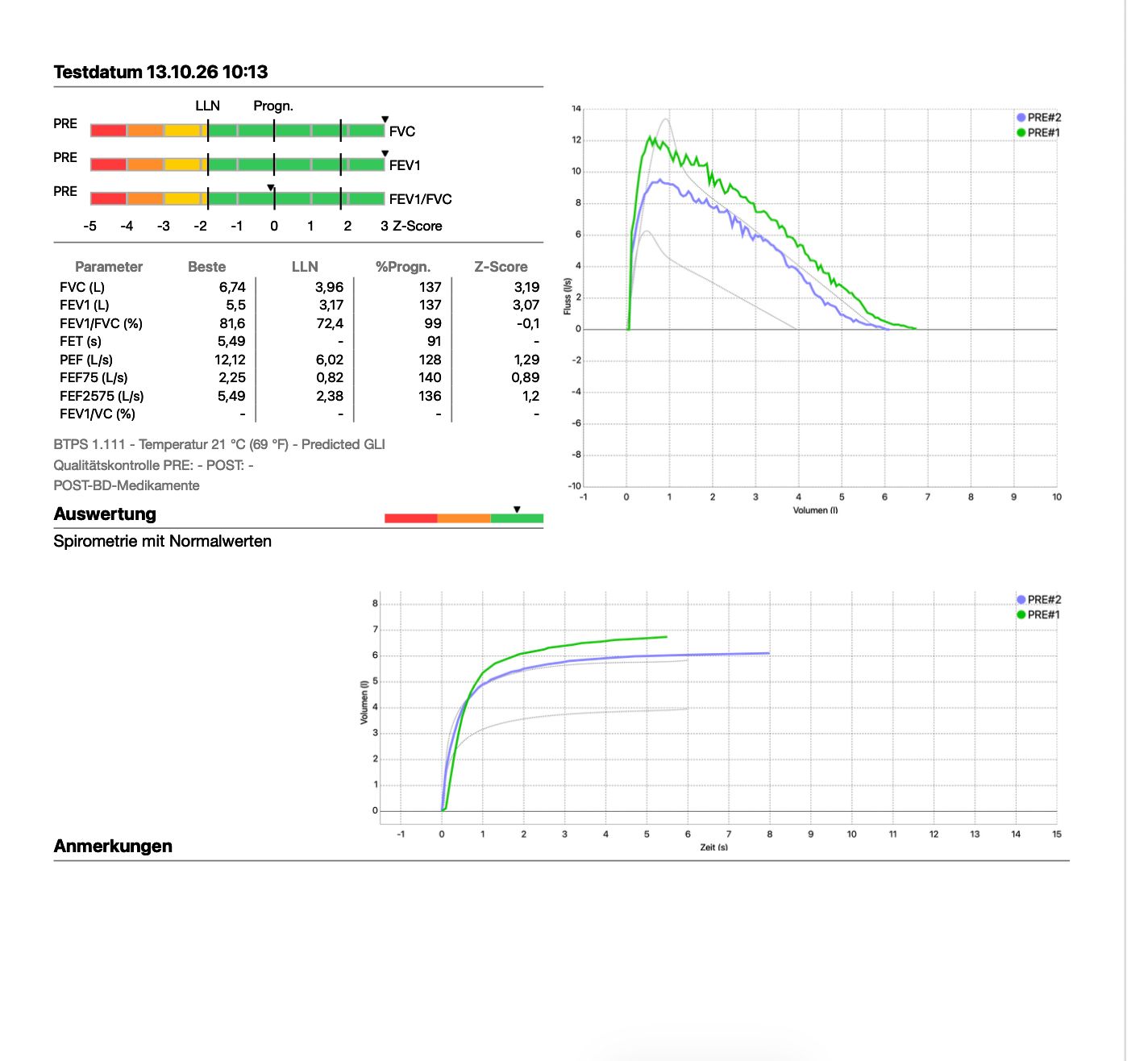
Our pulmonary rehabilitation programme is planned individually to increase respiratory capacity, reduce breathlessness and restore lung health. We begin with an objective measurement of current lung capacity and breathing function using spirometry. Based on the scientific data obtained, we apply diaphragmatic breathing training, specific exercises to strengthen inspiratory and expiratory muscles, and guided breathing drills. We also integrate pulmonary drainage techniques to clear secretions from the airways and improve lung ventilation, while tracking your progress with concrete measurements throughout treatment.

Selected publications

1

Body composition, quality of life and anxiety–depression in COPD

Healthcare. 2025.

Kurtoğlu A, Eken Ö, Çiftçi R, Balıkçı Çiçek İ, Durmaz D, Arğalı Deniz M, Aldhahi MI. Investigating the Impact of Body Composition Analysis on Quality of Life and Anxiety–Depression in Adult Males with Chronic Obstructive Pulmonary Disease. Healthcare. 2025;13(12):1442. https://dx.doi.org/10.3390/healthcare13121442

02 Treatment

Cardiac Rehabilitation

We rebuild your heart health within safe exercise limits and with real-time physiological monitoring. The cardiac rehabilitation programme is planned individually using scientific data to strengthen cardiovascular capacity, improve myocardial function and regulate autonomic balance. Our systematic review and meta-analysis showed that properly structured exercise programmes reverse the sedentary cardiac phenotype caused by inactivity and excess weight, increase pumping capacity and diastolic function, and meaningfully lower resting heart rate and blood pressure — independent of weight loss. On this scientific foundation, we begin by objectively determining the current capacity of your respiratory and circulatory systems through breathing measurements and VO2max analyses. During sessions we use Polar sensor technology to monitor active heart rate and heart-rate variability (HRV) in real time, and we regularly track haemodynamic responses with continuous blood-pressure checks. By precisely defining individual aerobic and anaerobic thresholds, we apply targeted aerobic exercise to regulate blood pressure and interval protocols within safe ranges to increase structural and functional cardiac capacity. In this way we develop your cardiovascular system in a measurable, risk-controlled manner fully within your target heart-rate zone.

Selected publications

1

Exercise reverses the sedentary cardiac phenotype in obesity

BMC Sports Science, Medicine and Rehabilitation. 2026.

Kurtoğlu A, Türkmen M, Kurtoğlu E, Çar B, Govindasamy K. Exercise reverses the sedentary cardiac phenotype in obesity: a systematic review and meta-analysis of hemodynamic, structural, and functional adaptations. BMC Sports Science, Medicine and Rehabilitation. 2026;18:404.

Therapeutic Exercise / Physiotherapy Exercise
03 Treatment

Therapeutic Exercise / Physiotherapy Exercise

Our approach to therapeutic exercise combines clinical physiotherapy with modern principles of sports science. Instead of applying the same procedures to every patient, we prepare a fully individualised assessment and exercise plan based on your condition, its course and the affected region. Whether in conservative care or in pre- and post-operative rehabilitation protocols, we perform only the analyses your complaint requires — joint range of motion, muscle strength, posture and asymmetry assessment where relevant, or functional and anthropometric measurements when needed. From there we build your enabling programme by monitoring motor qualities such as strength, flexibility, endurance, speed, reaction time and coordination according to recovery goals, so we can follow your safe return to daily life step by step.

Selected publications

1

Lower extremity myotonic properties, strength and balance

Journal of Clinical Medicine. 2026.

Azim D, Özer Ö, Kurtoğlu A, Elkholi SM. Associations Between Lower Extremity Myotonic Properties, Strength, and Balance in American Football Players: An Exploratory LASSO-Based Study. Journal of Clinical Medicine. 2026;15(12):4842. https://dx.doi.org/10.3390/jcm15124842

Manual Therapy
04 Treatment

Manual Therapy

Our manual therapy approach is planned individually to resolve movement restrictions in spinal and peripheral joints, modulate pain and restore tissue biomechanics within healthy limits. Instead of uniform manoeuvres for every patient, we perform a clinical assessment focused exclusively on the source of the complaint, the affected anatomical structure and tissue tolerance. Depending on your condition, we examine joint range of motion (ROM), tissue sensitivity, muscle tone (stiffness and elasticity) and neural dynamics. Based on the clinical findings we integrate specialised joint mobilisation, soft-tissue and myofascial release techniques, traction to unload the joint space, and neurodynamic mobilisation. Our goal is not temporary relief alone, but the safe release of joint locking and muscle guarding so your natural movement pattern can be restored in a lasting way.

Selected publications

1

EEG band power after manual, vibrating and percussive massage protocols

Under Review. 2026.

Multi-centre research project currently under review (co-author: Assoc. Prof. Dr. Ahmet Kurtoğlu): Protokoll- und tageszeitabhängige Modulation der EEG-Bandleistung im Ruhezustand und der sensomotorischen Topografien nach manuellen, vibrierenden und perkussiven Massageprotokollen bei Sportlern.

Manual Lymphatic Drainage (MLD)
05 Treatment

Manual Lymphatic Drainage (MLD)

Precise, rhythmic therapeutic applications to control oedema, stimulate circulation and accelerate tissue healing. Our manual lymphatic drainage approach is designed individually to drain excess fluid accumulated in the tissues safely through the lymphatic system, reduce internal tissue pressure and speed healing. Instead of a standard routine, we set an assessment and follow-up plan focused on the source of the oedema, the affected region and tissue sensitivity. Especially after surgery or injury, in chronic lymphoedema and lipedema, and in venous circulatory insufficiency, we measure limb circumference and tissue tension to monitor results objectively. Through gentle, rhythmic, individually tailored manual manoeuvres we activate lymphatic flow — easing pain and restoring movement and tissue health with full safety.

Neurological Rehabilitation
06 Treatment

Neurological Rehabilitation

Sensorimotor relearning through virtual-reality technology (Healytics Motion), digital support (E-Coach) and proprioceptive neuromuscular facilitation (PNF) methods. The neurological rehabilitation programme is planned individually for patients with stroke, spinal cord injury, balance disorders and central or peripheral nervous system conditions, aiming to maximise everyday independence and movement quality. Instead of one protocol for everyone, we combine the scientific methods suited to your neurological condition, the affected limb and the functional deficit. To accelerate sensorimotor adaptation and neuroplasticity, our clinic blends established physiotherapy techniques with current technology: Proprioceptive Neuromuscular Facilitation (PNF): We apply evidence-based PNF techniques to improve neuromuscular flow and motor control, increase joint stability and restore functional movement patterns. Healytics Motion (AI-supported virtual reality): Beyond traditional routines, we turn therapy into an engaging, highly motivating experience through interactive VR scenarios designed around your diagnosis and needs. While you move safely in the virtual environment, the system measures joint range of motion, reaction speed and motor coordination in real time. Digital support and follow-up (E-Coach): To keep progress from stopping once you leave the clinic, we remotely follow your home exercises and daily activities via the E-Coach structure — so your neurological recovery continues safely and continuously. Drawing on all clinical observations and data, we develop balance, coordination, muscle-tone regulation, gait analysis and motor skills step by step so you can return to daily life with confidence.

Patients with statutory health insurance can be admitted from 1 December 2026.

Temporomandibular Joint Treatment (CMD)
07 Treatment

Temporomandibular Joint Treatment (CMD)

A tailored clinical approach addressing dysfunction between the jaw joint, the masticatory muscles and the cervical region. Temporomandibular disorders (CMD) are complex conditions that present as teeth grinding (bruxism), joint locking, clicking during opening and closing, and excessive masticatory muscle tension — often accompanied by head, neck and shoulder pain. Beyond standard routines, we perform a comprehensive clinical assessment of the pain source, disc position and asymmetry in muscle tension. As needed, we examine jaw-joint range of motion, myotonometric tissue properties of the masticatory and neck muscles, and the biomechanics of the cervical spine. Guided by clinical findings we apply: Specialised joint mobilisation and manual techniques: Safe manual applications to overcome movement restrictions in the TMJ and upper cervical region. Myofascial release and muscle regulation: We ease spasm, trigger points and excess tension in the masticatory muscles to restore tissue elasticity. Coordination therapy and exercise: We support coordinated jaw movement, correct muscle activation patterns and postural harmony between neck and jaw with specialised exercises. Our goal is not pain relief alone, but lasting restoration of natural joint function and comfortable chewing.

Patients with statutory health insurance can be admitted from 1 December 2026.

Selected publications

1

Smartphone addiction and temporomandibular disorders

Medicine. 2026.

Çelik Güzel H, Türkmen OB, Kurtoğlu A, Keçelioğlu Ş, Akçay B, Kaya Mutlu E, Albasha N, Elkholi SM. Smartphone addiction and temporomandibular disorders among university students: A machine learning based multiple regression analysis study. Medicine. 2026;105(14):e47931. https://dx.doi.org/10.1097/MD.0000000000047931

Sports Physiotherapy and Athlete Health
08 Treatment

Sports Physiotherapy and Athlete Health

From elite athletes to active individuals: comprehensive, evidence-based care from injury prevention through to a safe return to the field. Our sports physiotherapy approach is planned individually to reduce injury risk and restore peak performance while respecting the motor and physiological demands of each sport. Instead of generic plans, we perform a scientific assessment specific to injury type, affected region, sport loading pattern and the athlete’s target training phase. According to your needs and sport: Injury prevention and risk analysis: Objective tests identify joint and muscle asymmetry, strength imbalances and deficits in neuromuscular control, then preventive protocols are applied to stop recurrence. Pre-operative / post-operative rehabilitation: A staged pathway aligned with tissue healing for ACL, meniscus, rotator cuff or muscle tear cases. Safe return to sport: We do not stop at pain removal. Explosive strength, anaerobic capacity, reaction time and field-specific motor skills must be confirmed before full, safe clearance for competition.

Heat and Cold Therapy
09 Treatment

Heat and Cold Therapy

From acute injury management to release of chronic tissue tension: recovery guided by physiological thermal modalities. Cold and heat applications are designed according to clinical need to improve tissue metabolism, blood flow and pain tolerance. Away from routine application, we set a plan based on injury stage (acute or chronic), tissue heat tolerance and inflammatory status. As needed: Cryotherapy: Controlled cold applications to curb oedema, inflammation and acute pain — especially after direct injury or intense exercise — by lowering local metabolic rate and protecting tissue. Thermotherapy: Targeted heat modalities to release chronic muscle spasm, increase soft-tissue and joint flexibility, and stimulate tissue nutrition and recovery via increased perfusion. These modalities are applied safely as clinical adjuncts to prepare tissue before manual therapy and exercise sessions, or to support recovery afterwards.

Electrotherapy
10 Treatment

Electrotherapy

Neuromuscular stimulation, deep blood-flow support and targeted pain modulation with advanced device technology. This approach is supported by high-precision devices with proven clinical reliability. Instead of one current or fixed settings for everyone, we define frequencies, wavelengths and application protocols according to disease stage, neuromuscular response and tissue sensitivity. In our clinic we elevate electrostimulation sessions by combining vacuum therapy: electrodes are fixed to the skin with even, rhythmic pressure, producing a controlled local increase in blood flow (hyperaemia). This mechanical effect improves current delivery into tissue, releases chronic muscle spasm and accelerates cellular healing processes.

EMG Biofeedback
11 Treatment

EMG Biofeedback

An active-learning neurophysiological therapy that rebuilds neuromuscular control and muscle activation through visual and auditory signals. An effective method that restores the brain–muscle connection by letting patients follow their real-time muscle activity on screen with graphical and sound cues. Instead of fixed procedures, we set individual thresholds and protocols based on the muscle’s functional status, voluntary contraction capacity and rehabilitation goals. According to your needs: Muscle activation and strength building: Support restarting weak muscles after surgery or immobilisation by helping you contract the target muscle consciously and precisely (motor-unit recruitment). Muscle relaxation and spasm control: Achieve myofascial relaxation by training conscious release in chronic spasm, hypertonia or involuntary contractions. This technique is a powerful clinical tool that accelerates recovery and makes it lasting by giving patients conscious control over body and muscle.